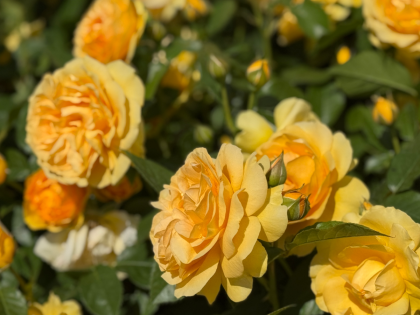
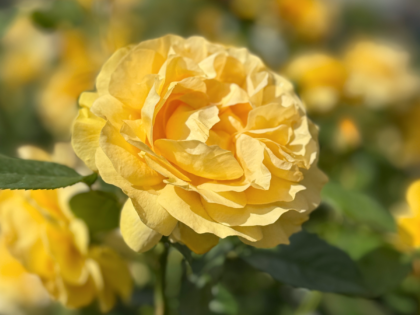
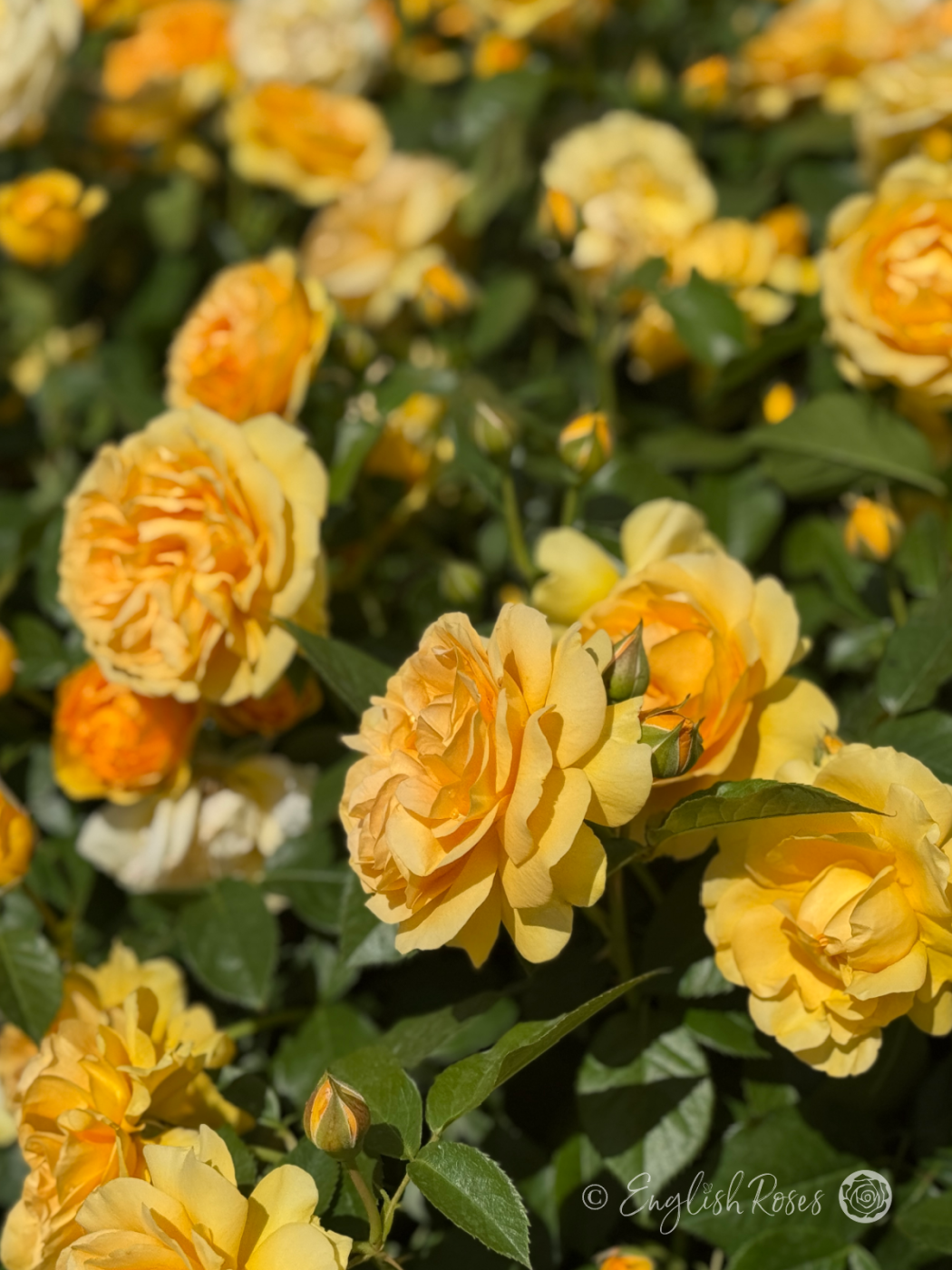
An immensely popular floribunda celebrated for its buttery yellow flowers, great disease resistance and delicate liquorice scent. Introduced in 2004 and winner of Rose of The Year in 2010. You can purchase Absolutely Fabulous Rose here.
Watch our video to see how this wonderful variety looks in the garden.
Description #
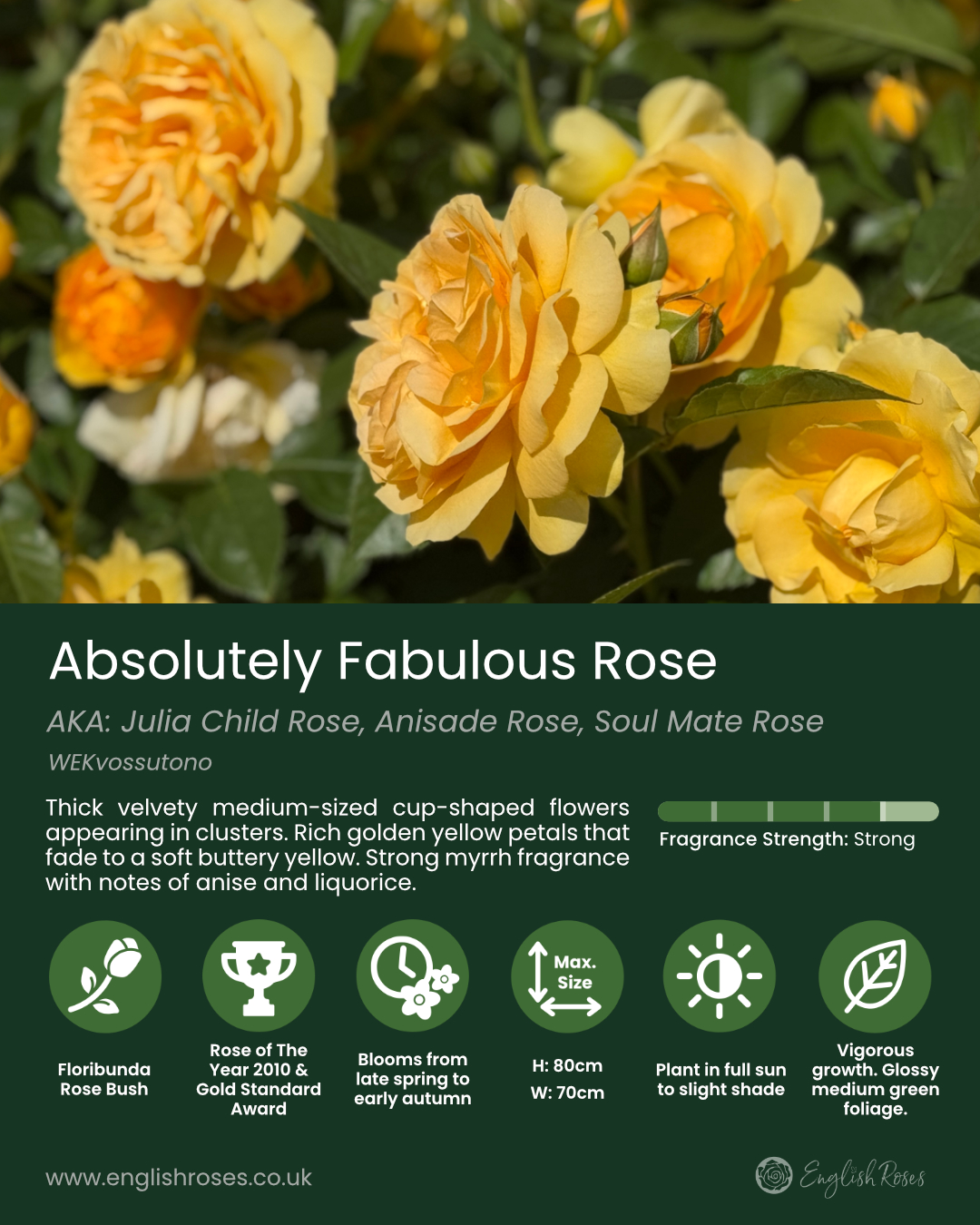
| Colour: | Initially rich and golden yellow that fades to a softer buttery yellow as the flower ages |
| Maximum Height/Width: | 80/70 cm (in 3 to 5 years) |
| Foliage: | Glossy, medium green |
| Habit: | Floribunda bush rose – vigorous growth |
| Petal and Form: | 30 to 45 petals, thick and velvety, medium-sized cup-shaped flowers appearing in clusters |
| Blooming Period: | Late spring to first frost |
| Fragrance Profile: | Strength – strong Primary Scent – liquorice, anise Nuance – myrrh |
Photos #
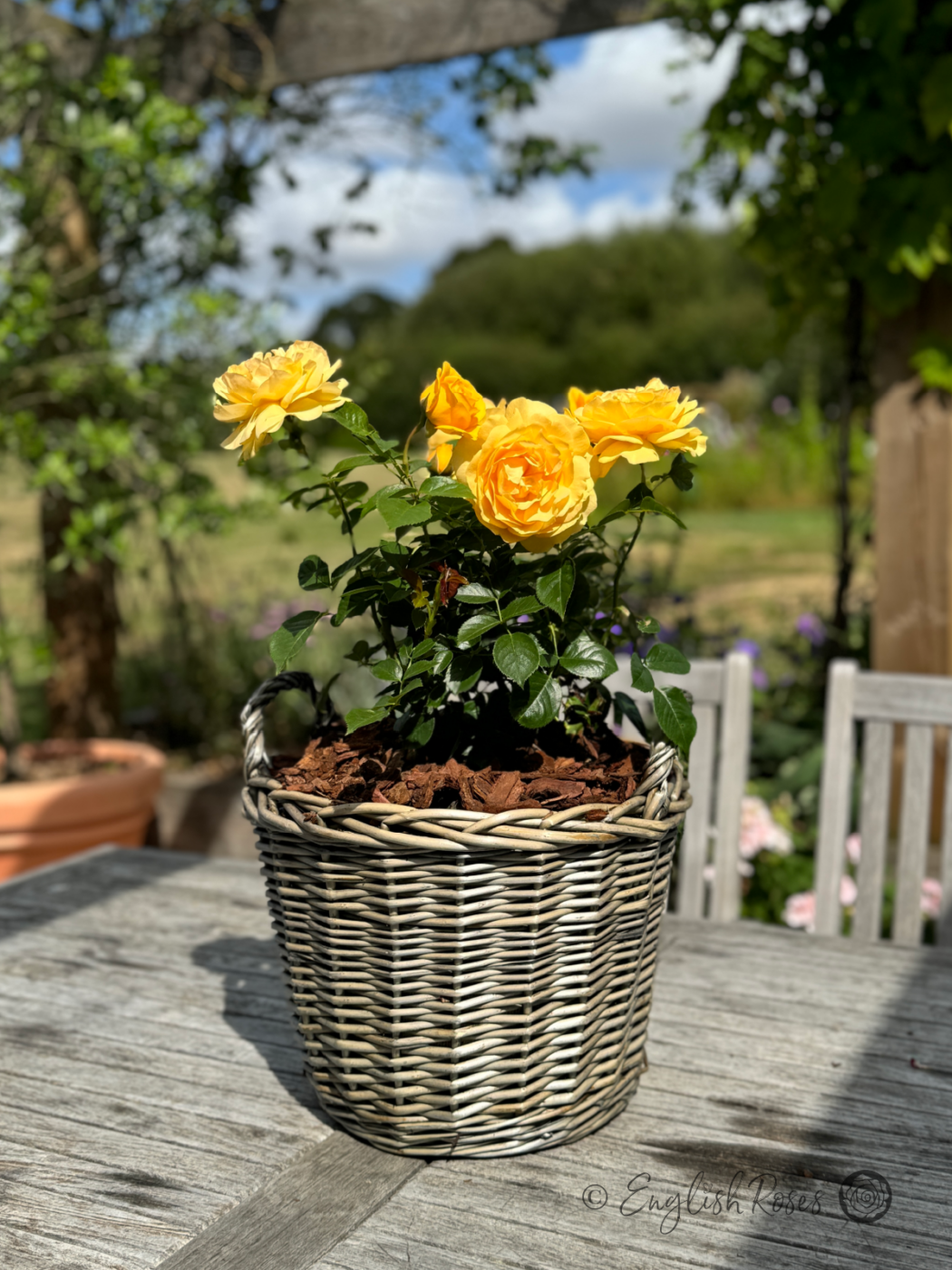
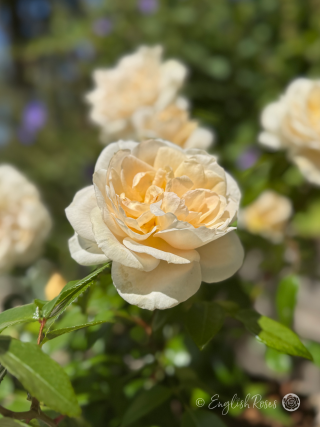
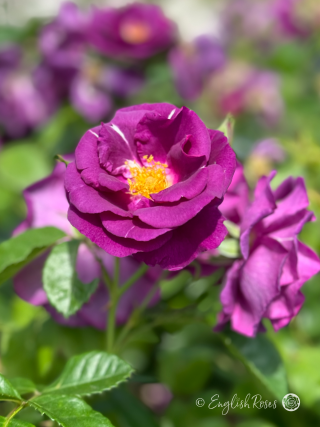
Taken here at English Roses, we have a selection of photographs showing this wonderful rose variety.
Fragrance Profile #
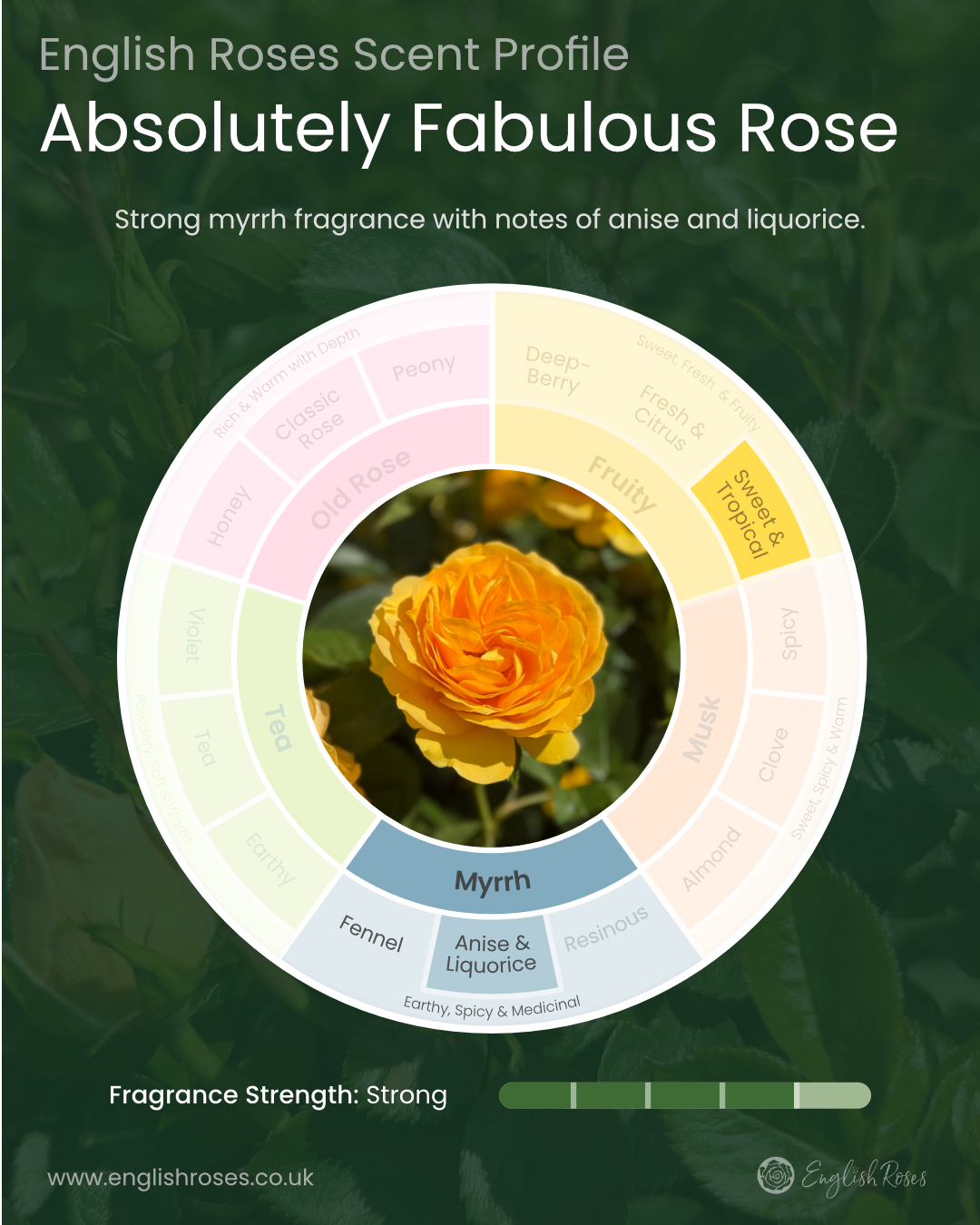
Strong myrrh fragrance with hints of anise and liquorice.
Strength – strong
Primary Scent – liquorice, anise
Nuance – myrrh
Nomenclature and Classification #
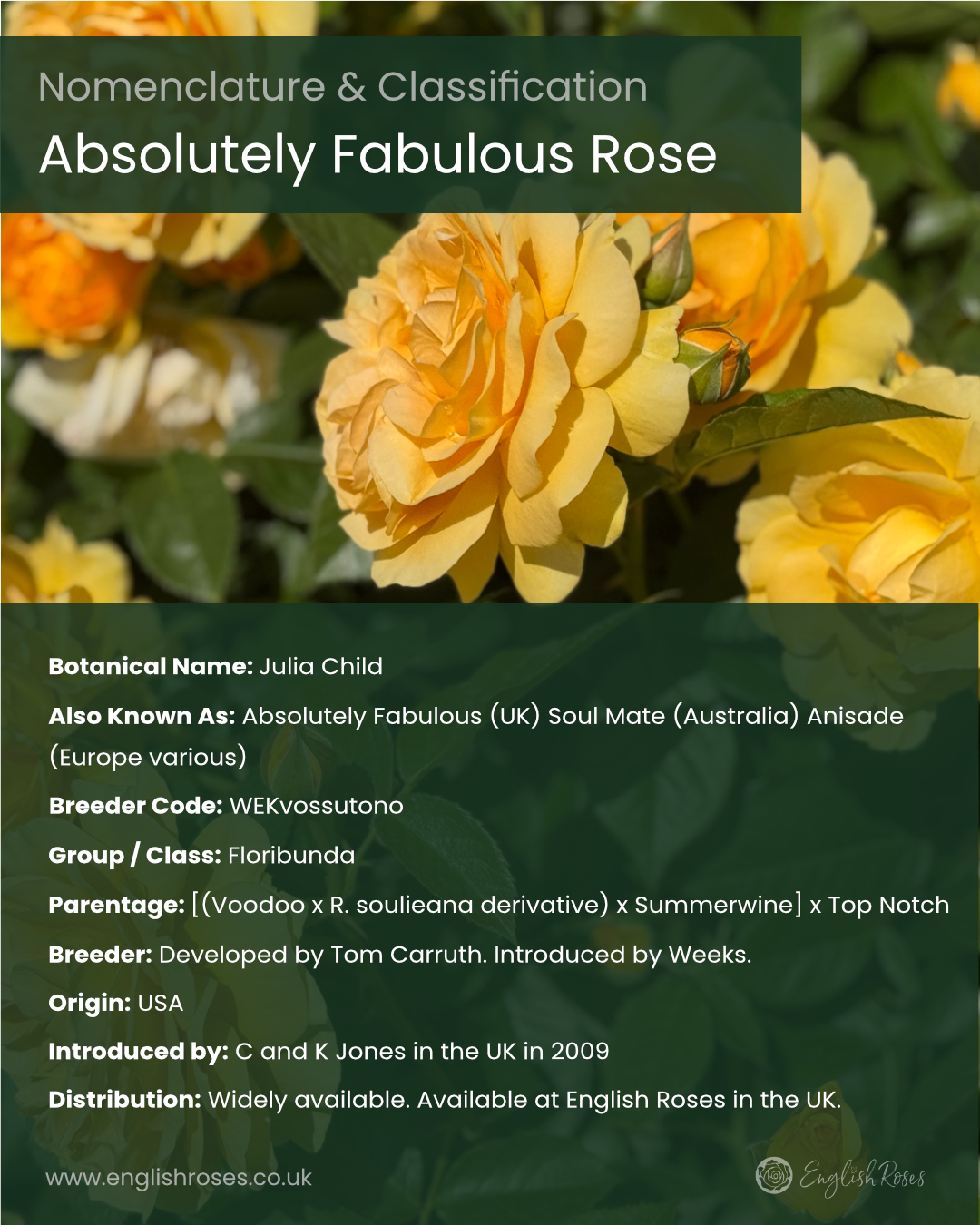
| Botanical Name: | Julia Child |
| Also Known As: | Rosa Absolutely Fabulous (UK), Rosa Soul Mate (Australia), Rosa Anisade (Europe various), Rosa Julia Child, Rosa WEKvossutono |
| Breeder Code: | WEKvossutono |
| Group / Class: | Floribunda |
| Breeder: | Developed by Tom Carruth. Introduced by Weeks |
| Parentage: | [(Voodoo x R. soulieana derivative) x Summerwine] x Top Notch |
| Introduced by: | C and K Jones in the UK in 2009 |
| Origin: | USA |
| Distribution: | Widely available. English Roses supply rose gifts including Absolutely Fabulous Rose in the UK |
| Awards: | Rose of The Year 2010, Gold Standard Award, Best Established Rose at the City of Glasgow Rose Trials 2019, RHS AGM 2012, All American Rose Selections (AARS) in 2006 and the Gold Star of the South Pacific in 2011. |
History and Development #
Known in the UK as Absolutely Fabulous after the BBC comedy, the rose was originally named after TV Chef Julia Child in the USA. Julia Child was a pioneer of TV cookery in the States with her show The French Chef that first aired in 1962. Her association with the rose occurred at Rose Story Farm in California. Purchased by the Hahns in 1988, they transformed orchards of lemon trees into a 25 acre rose farm – this despite little knowledge of farming.
Julia Child became a friend of the family regularly joining them for Sunday dinners and holiday celebrations. During these gatherings Danielle Hahn’s father, Lorenzo, would attempt to persuade Child to lend her name to a rose – particularly a yellow rose the colour of which she favoured. Child had never sponsored a range of kitchen equipment or even a scholarship believing that it would only benefit individuals. Lorenzo would point out that a rose was accessible to everyone but to no avail. For years she resisted their entreaties until one day, unannounced, she arrived at the farm with her lawyer and proceeded to choose her rose.
She found it in Danielle’s test garden where growers would assess their plants in various climates. Danielle was at pains to state that Julia was attracted by the colour and unusual scent – not because it looked and smelled of butter (a silly contrivance often purported).
More Facts #
If you are in London and can visit the delightful Queen Mary’s Rose Garden in Regent’s Park, you will find Absolutely Fabulous in bed no. 70!
Requirements and Maintenance #
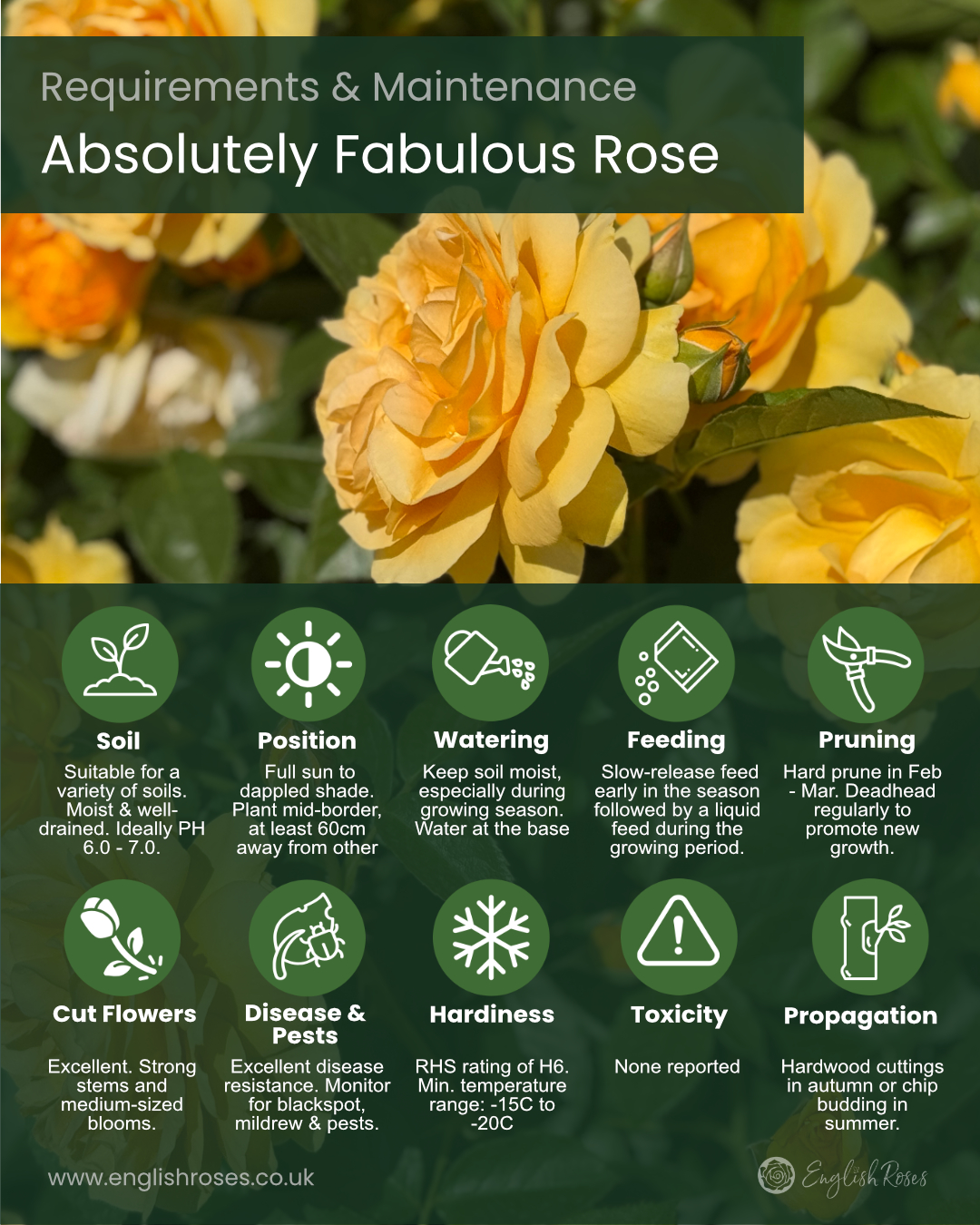
Soil #
Flourishes in a variety of soils especially when mulched with manure or compost. Moist but well-drained and slightly acidic to neutral if possible (ph 6.0 – 7.0). Fertilise in early spring with balanced rose fertiliser and repeat according to packet instructions.
Toxicity #
None reported.
Hardiness #
RHS rating of H6 indicating a minimum temperature range of -15C to -20C.
Diseases and Pests #
Excellent disease resistance. While yellow roses have had a reputation for disease susceptibility however, this is largely a historical issue. Modern yellow roses – especially award winners – are much less prone to infection. Nevertheless it should be standard practice to be vigilant for signs of common threats such as mildew and blackspot. Signs of insects such as aphids and mites should also be monitored.
Treat mildew by pruning affected leaves.
Treat aphids by growing plants that attract insects that prey on aphids. See companion plants below.
Treat blackspot by pruning affected leaves, destroying fallen leaves.
We do not recommend using chemical fungicides as they risk reducing soil health and negatively affecting biodiversity.
See our help guides for more details.
Position #
Full sun to dappled shade in mid-border. For containers ensure the pot is at least 12 inches deep and 15 inches in diameter with drainage holes. Plant a minimum of 60 cm apart from other roses.
Cut Flowers #
Strong stems and medium-sized blooms make for an excellent cut flower.
Watering #
Keep the soil consistently moist, especially during the growing season. Water at the base of the plant to prevent fungal diseases.
Feeding #
Slow-release feed early in the season followed by a liquid feed during the growing period.
Pruning #
Hard prune in February or March. Regular deadheading during the season promotes new growth.
Propagation #
By hardwood cuttings in Autumn or chip budding in summer.
Companion Planting #
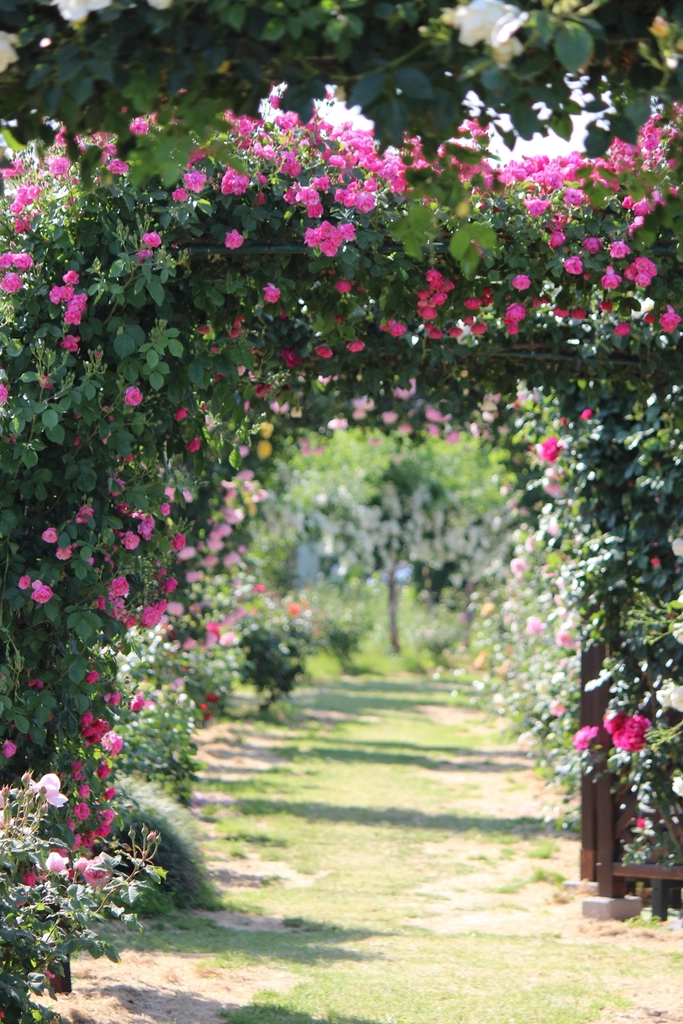
The first step is to choose plants that share similar requirements in terms of soil, fertilizer, water and sun exposure. Be mindful of prolific plants that may compete with your roses.
You may wish to avoid plants that attract aphids such as cosmos, nasturtiums and sunflowers although they can also act as a lure to draw pests away from your roses.
Consider plants that attract insects that feed on aphids. Lacewings, ladybirds and hoverflies are predatory insects that eat pests. The Seedball Beetle mix is perfect for attracting ladybirds to your roses.
Planting the likes of catmint and marigolds you encourage a natural ecosystem beneficial to your roses. Catmint is also a good pollinator and provides attractive ground cover. A lower growing marigold such as French or Signet performs a similar task and delivers a colourful carpet around your roses.
Plants such as alliums, lavender and geraniums possess strong scents that repel pests. Lavender in particular will compliment Absolutely Fabulous aesthetically and will enjoy a full sun position.
Use a colour wheel to determine complimentary colours. Absolutely Fabulous roses will form a dramatic contrast when planted with cool blues, violet and blue violet. For a more soothing look try green and orange tones. There are, however, no rules and choosing a dramatic clash of colours can also work.
Consider plants that will offer colour into the autumn such as salvias and viburnum.
Complementary Roses #
-

Champagne Moment Rose #
Add to Basket£32.99 -
Rhapsody In Blue Rose #
Add to Basket£32.99 -
Blue Moon Rose #
Add to Basket£32.99 -
It’s A Wonderful Life Rose #
Add to Basket£32.99 -
Mamma Mia Rose #
Add to Basket£32.99
Reviews #
Horticultural Reviews #
- ‘I was so impressed that I bought 4 for myself as soon as they became available. It does not disappoint. Mine are in with irises with “buttery” or “creamy” names and white or yellow coloring. The combination works, but the most impressive thing is how the roses bloom continually yet get very little water, because I prefer to keep the irises on the dry side.’ The National Gardening Association
- ‘Ten Most Beautiful Roses to Grow In Your Garden’ Garden Beast
- ‘Great Roses to Grow in Pots’ Garden Design
Customer Reviews #
See what our lovely customers say about this variety:




Where to Buy Absolutely Fabulous Rose #
Winner of Rose of the Year 2010, and Gold Standard award, Absolutely Fabulous really is an absolutely fabulous rose! This is a multiple award winning rose, meaning it has come out on top in numerous trials. With its beautiful buttery-yellow flowers and distinctive liquorice-like scent, this rose is one to be remembered. Perfect for sending to friends and family for any special occasion, Absolutely Fabulous will bring smiles wherever it goes.
Resources #
rhs.org.uk, helpmefind.com, pithandvigor.com, wikipedia.com, gardendesign.com, rosesuk.com, garden.org, gardenbeast.com