After the flowers have faded, the Rose plant grows a fruit (or seed pod) called a “hip”. We often don’t see these as most rose growers prune down the rose to encourage more flower growth, and to stop the rose from using energy growing hips. However, most rose plants will produce hips if left to their own devices, and these can be stunning in themselves. In particular, rambler roses that have been grown through hedging or trees look eye catching with the small bright fruits showing through the greenery.
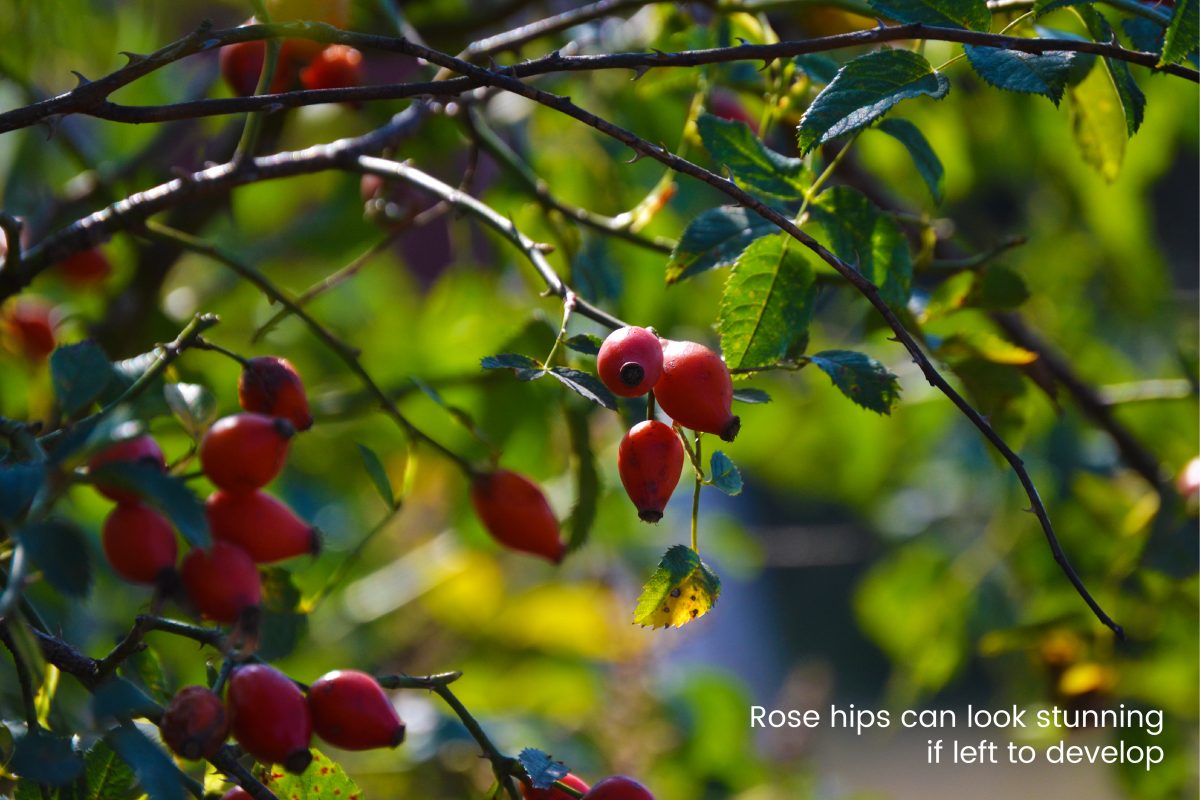
Rose hips come in all shapes and sizes; rounded and elongated, small and large, red, orange, purple and black, and some are even prickly.
If you leave your spent flowers on the rose at the end of the season, the small berry-like seed balls will develop on the tips of the stems. Not only do birds enjoy these delicacies, but they are safe for humans to eat too! Roses are in the same family as apples and crab apples, and their fruits bear a strong resemblance to these plants. Rose hips have the tart flavour of crab apples, and are a great source of vitamin C.
How to Harvest Rose Hips
If you are going to use rose hips for ingesting, please ensure that you avoid roses that have been treated with pesticides and other chemicals.
The ideal time to harvest is after the first light frost has nipped the leaves, but before a hard frost that freezes the hips. A light frost will help sweeten the hips, and waiting until the colder weather will ensure the rose doesn’t try and send out new growth, which would be killed back at the next frost anyway.
Hips should be firm and have a good colour (usually red or orange at maturity, but this depends on the rose variety). Leave any shrivelled or dried rose hips on the plant for the birds to enjoy; they won’t be as tasty for you and may even be too mushy to pick.
Wearing gardening gloves, simply clip the rose hips off the stems. Using a knife or scissors is usually best, but fully ripe hips can also just be plucked off by hand.
Prepare the Rose Hips
- Wash the hips thoroughly
- Using scissors or a sharp knife, trim the stem and blossom ends from the hip
- Slice in half to expose the seeds
- Scrape or scoop out the seeds, and discard them
- Rinse again in a colander
Your hips are now ready to use, or to be dried or frozen ready for future use.
You are able to use the rose hips whole, but the seeds inside have a hairy covering that can be irritating, so for most recipes it is best to remove them prior to eating. If using a recipe that calls for the straining of the hips, the removal of the seeds can be skipped, as they would be filtered out anyway.
Uses for Rose Hips
Rose hips are versatile little things, and can be used in a number of different recipes. From soups to jams, cordials to tea, there is something for everyone. Watch this space for more recipes coming in the future, but for now… rose hip tea!
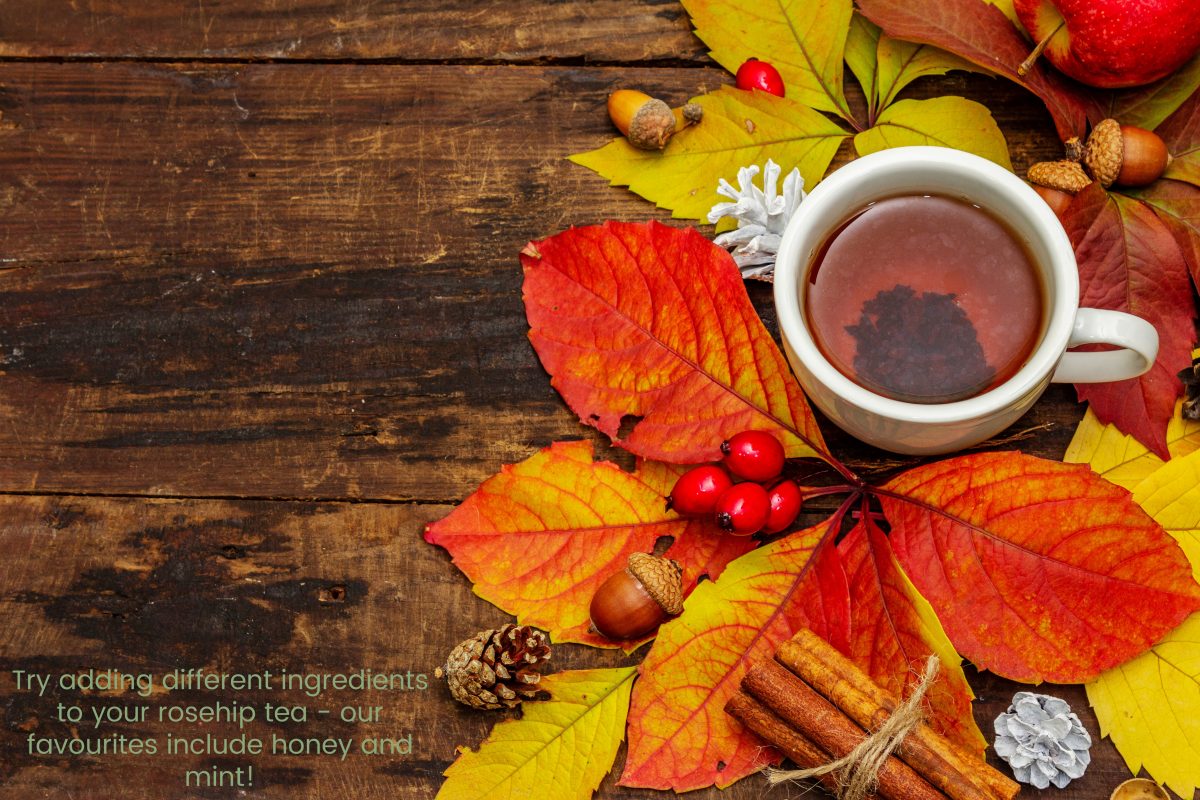
Our favourite recipe, and also one of the simplest, is for rose hip tea. It also gives you a great indicator as to whether you enjoy the flavour, and wish to harvest greater quantities.
Simply steep approx 8 fresh rose hips in boiling water (you will need about double if using dried hips) in a cup of boiling water for about 10 minutes, strain and enjoy.
Rose hip tea can be a tad tart or bitter, especially if you’re not used to the flavour. We like to add a dash of honey to sweeten the tea, and a couple of mint leaves to lighten it. Or you can always add your own additions, according to your personal tastes. The possibilities are endless!
Be sure to sign up for our free newsletter and follow us on facebook and Instagram for the latest news, offers and promotions!